
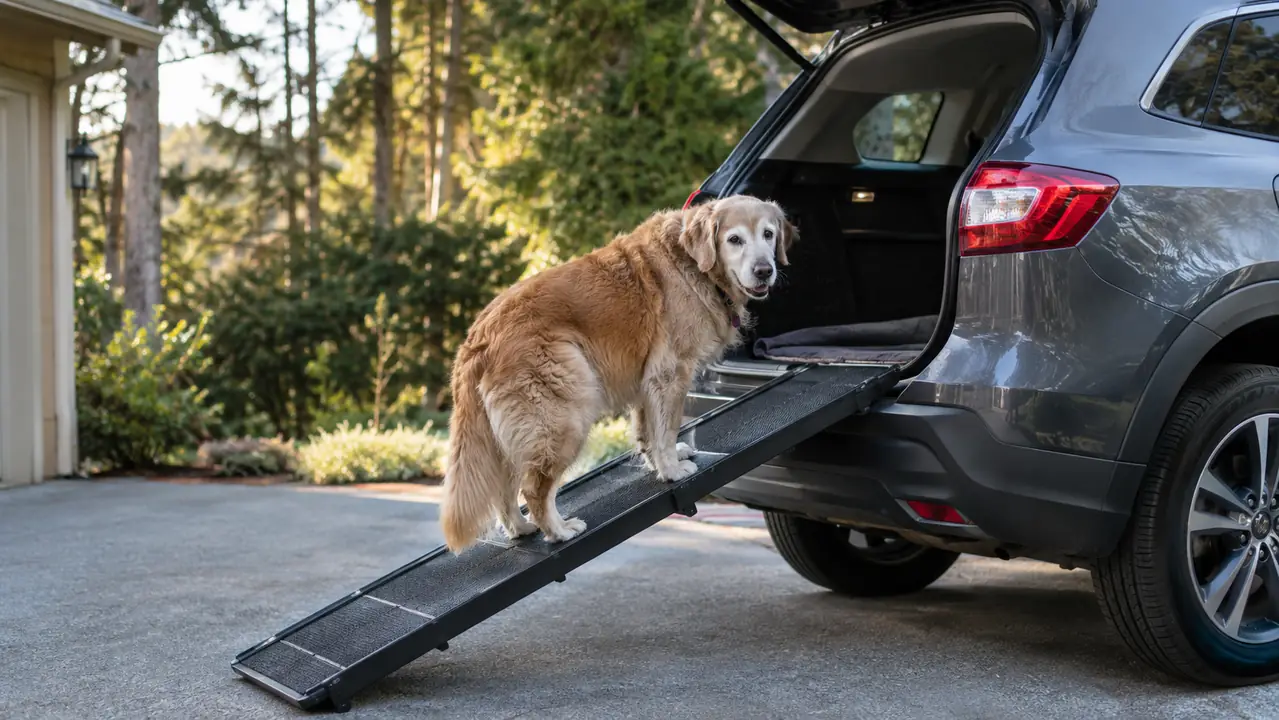
I will tell you the part the product page leaves out: the first time I unfolded the PetSafe Happy Ride Ramp in my driveway, Maple looked at it like I had set up a piece of gym equipment she was expected to vault. She is 11, a yellow Lab, about 70 pounds, and her back hips have been stiff for two years. She had already started hesitating at the back porch steps and bracing before she jumped into my small SUV. I bought this ramp because I was tired of watching her gather herself for a leap that was getting harder every month.
Six months later, she walks up it most days without being asked. But the road between those two moments had more false starts than I expected, and most reviews do not mention them. This is the honest version, the one I wish someone had given me before I ordered.
The Quick Verdict
The PetSafe Happy Ride Ramp does its job well once your dog trusts it, but the trust takes longer than the marketing suggests, and the folding latch needs a patient owner.
Amazon Check Today's Price →A ramp that gets your senior dog into the car without the leap
If your dog is starting to hesitate before jumping in, this is the ramp I reached for. It folds flat, grips the bumper, and has held up to daily use for six months at my house.
Amazon Check Today's Price on Amazon →How I Have Used It
Maple is a 70-pound yellow Lab with stiff back hips. Her back hips have been stiff for about two years, not from any specific injury, and the vet was clear that I should focus on reducing impact and keeping her moving. The car was the biggest impact of her day. My small SUV has a lift height that used to be nothing for her, and at nine she still sailed in. By ten, she was pausing. By eleven, she was standing at the open door looking at me, and I knew what that look meant. It was the same look she gave the porch steps on bad mornings, and I hated it.
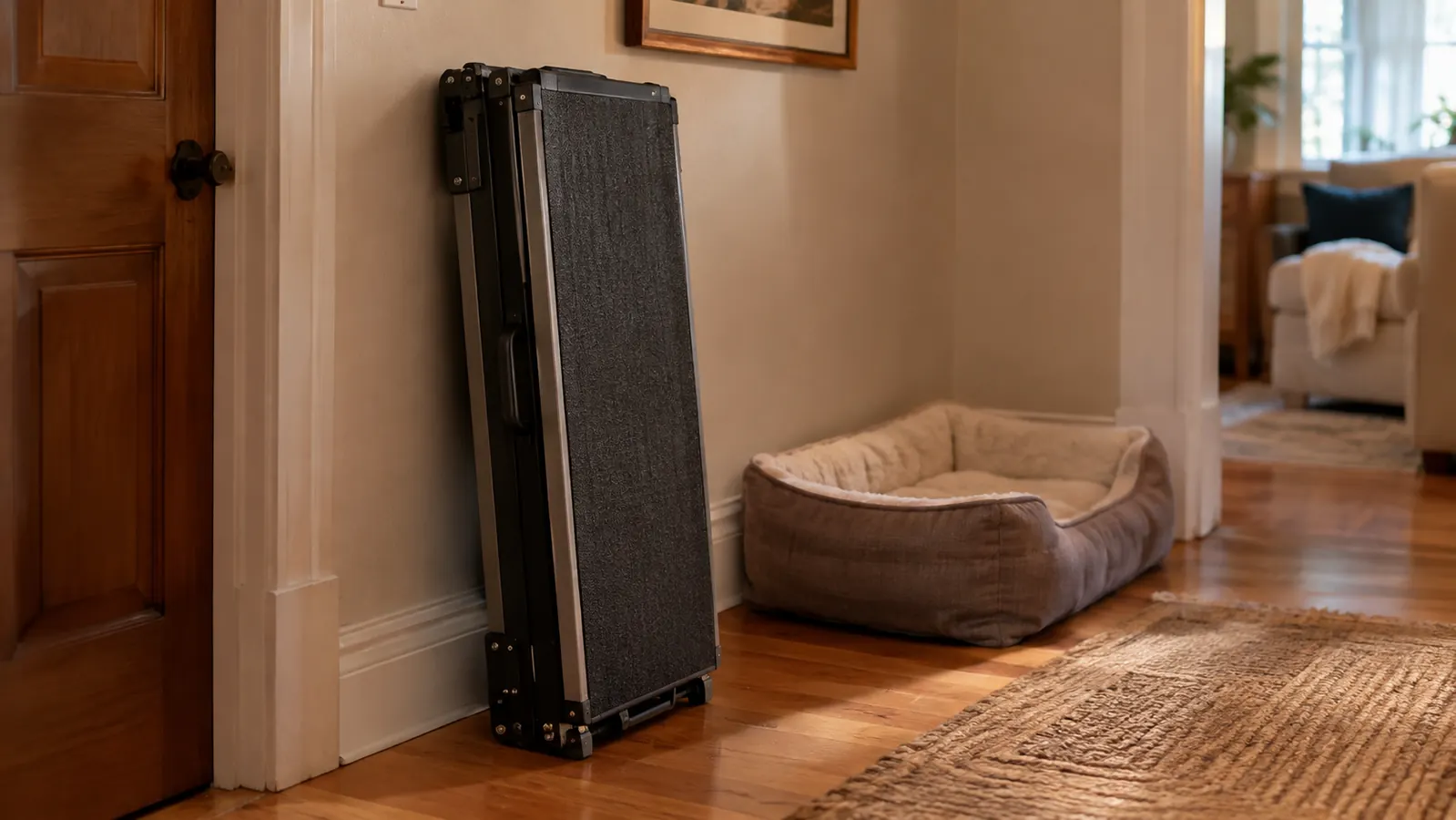
I have used the PetSafe Happy Ride Ramp nearly every day for six months, mostly for the car, and occasionally for the three back porch steps on days when her hips were especially sore. It folds in half, latches closed, and it stands flat behind the back seat of my SUV. Unfolded, it runs a little over five feet long and about sixteen inches wide, which was longer than I expected the first time I laid it out. Maple's whole paw fits on the walking surface with room to spare, and that matters when a dog is already unsure of her footing. The surface is textured, which mattered to me because I did not want her slipping on a wet morning. The ramp has a lip that hooks over the bumper or the tailgate, and the whole thing is light enough for me to carry with one hand, which matters at my age and with my own iffy shoulder.
I remember the morning I started to believe it would work. It was a Tuesday in late April, cold enough that I could see my breath, and Maple had been using the ramp on the ground for a week. That morning I propped it at the gentlest angle I could manage, with the car backed up so the ramp barely rose. She walked up without pausing, turned around in the back seat, and lay down like it was the most ordinary thing in the world. She did not even pause at the top, which is the part I keep telling people about. I stood there in the driveway with tears in my eyes, and I am not ashamed to say it.
Before I figured that out, I tried everything wrong first. My first instinct was to hold a treat at the top of the ramp and let her follow it. That failed completely. Maple sat down at the bottom and stared at me like I had lost my mind. The treat meant nothing to her while the ramp felt unsafe. What finally worked was the opposite of luring: I stopped asking her to go up at all. I laid the ramp flat on the grass and walked her across it a few times a day for a week, treating every crossing like a victory. Only then did I raise it, and only by a little.
I want to be clear about what I am not claiming. I am not a vet, and I am not saying this ramp cures anything. What I can tell you is what I observed: Maple stopped bracing before she got in the car, she stopped hesitating at the open door, and on days when she was stiff, she used the ramp without the little pause that used to break my heart.
What Nobody Tells You Before You Buy
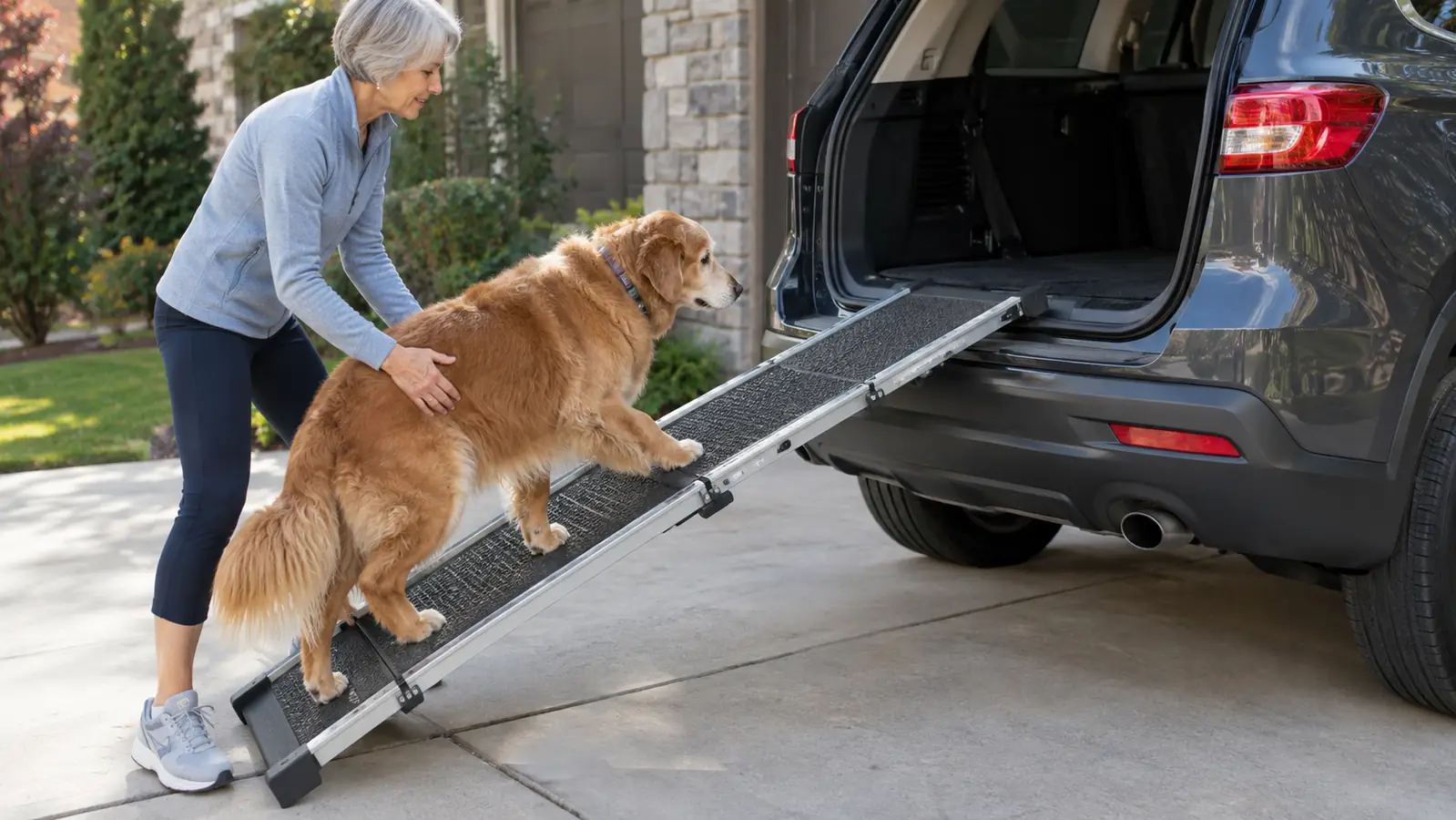
Here is the first thing nobody tells you: your dog has to learn to use it, and that learning curve is real. The PetSafe Happy Ride Ramp is not a magic ramp that a senior dog instantly understands. Maple spent the first week treating it as a suspicious object. Day one, she sniffed it and walked around it. Day three, she would put her front paws on it and nothing else. Day five, she walked across it flat on the ground, but only if I walked with her. Day six, she did it on her own, but only after she watched me walk across it first, which made me feel a little silly standing on a dog ramp in the yard. I kept a small bag of treats in my pocket the whole week, not to lure her up, but to reward her for any step at all. Even then, she wanted to jump around it rather than walk up it. I had to be patient in a way that the product photos do not prepare you for.
The second thing nobody tells you is that the folding latch is fiddly. The ramp locks into place with a mechanism that takes two hands and a little muscle. I have arthritis in my thumbs, and there were mornings I muttered at it. It is not hard, exactly, but it is not the one-handed flip the videos make it look like. If you have limited hand strength, you will want to try the latch before you commit. I timed myself the first week and it took me a full minute of fiddling to get both sections locked. Now it takes maybe fifteen seconds, but I still have to use two hands every time.
The third thing is the one I almost did not learn because I almost gave up: angle matters more than anything. The PetSafe Happy Ride Ramp works beautifully when the angle is gentle. The first few times I used it on my SUV, I had it too steep, and Maple planted her feet and refused. The day I backed the car up so the ramp sat at a shallower angle, she walked up like she had been doing it for years. That single adjustment changed everything. I measured it once, just out of curiosity: with the bottom of the ramp set on the flattest part of the driveway, the ramp sat at maybe a twenty degree angle, and that was the difference between a dog who refused and a dog who walked up calmly. I have kept the car parked the same way ever since.
The day I made the angle gentler, Maple walked up the PetSafe ramp like she had been doing it for years. That one adjustment changed everything.
The Good, After Six Months
Once Maple got the hang of it, the PetSafe Happy Ride Ramp became the most used piece of gear I own. She uses it for the car every time we go anywhere, which for us is at least four or five times a week. On Saturdays, the grandkids come over, and Maple rides with me to pick them up. She walks up the ramp, turns around, and settles into the back seat like it is the most normal thing in the world. Last Saturday, one of the grandkids asked why Maple did not jump anymore, and I explained that the ramp was saving her hips for the things that mattered, like chasing a ball in the yard.
The textured surface has held up well. We have used it in rain, in morning dew, and once in a light snow, and Maple has never slipped. That was my biggest worry when I bought it, and it has not been a problem. One morning in April, the ramp was wet from an overnight storm, and she still walked up without hesitation. The ramp also grips the bumper well. It has never slid out from under her, which was my second biggest worry. I looked the whole thing over the other day, checking the seams and the hinge points, and it still looks like the day I unpacked it.
It folds flat enough to ride behind the back seat, which matters in a small SUV. It takes up maybe four inches of depth behind the back seat. I can carry it with one hand, and I can set it up in under a minute now that I have the latch figured out. The whole routine, from opening the tailgate to having Maple in the back, takes less than two minutes. When she was jumping, I would spend that same time watching her brace and hoping she did not land wrong. Ours rides behind the back seat, so it never ends up buried under a bag of groceries. It is as much a part of our routine as the leash now.
The biggest change is harder to measure but easier to see. Maple stopped treating the car like a hurdle. She used to sigh before she jumped, the way I sigh before I get up from a low chair. Now she walks up the ramp with her tail level and her ears relaxed. The ramp did not fix her hips, and I would never claim that. But it took the dread out of the car, and for an old dog, that is a real thing.
The Not So Good, Honestly
The latch is the thing I would complain about if I had to pick one. It works, and I have used it twice a day for six months without it breaking, but it is not smooth. There is a learning curve for the human too. I will also say that the ramp is not something you want to leave set up in a walkway. It is sturdy enough for a dog, but I would not want to step on it myself in the dark, and I have nearly tripped over it once when I left it out after a morning walk. It was my own fault, and it did not hurt, but it reminded me that the ramp has a place to live and it is not the middle of the floor.
The other honest note is about the learning curve for the dog. If your dog is already nervous about new things, or if they have never used a ramp, budget a week of patience. I do not think this is a flaw in the PetSafe Happy Ride Ramp specifically. I think it is the nature of ramps. But the reviews that make it look like a dog will take to it instantly are not telling the whole story. The first week, I wondered if I had wasted my money. By the third week, I could not imagine going back.
And one more thing: it is not a cure for joint stiffness. The ramp removes the impact of jumping, which is genuinely valuable, but it does not replace vet care, joint supplements, or the slow walks that keep an older dog moving. I use all of those things with Maple, and the ramp is one tool in a bigger routine. She takes a daily joint chew my vet knows about, and Maple gets a short walk every morning no matter the weather. The ramp fits into that routine, but it does not replace any part of it.
What I Liked
- Textured surface gives my dog confidence even on wet mornings
- Folds flat enough to ride behind the back seat
- Light enough for me to carry with one hand
- Grips the bumper well and has never slid out from under her
- Once she learned it, she uses it without being asked
Where It Falls Short
- The folding latch takes two hands and a little muscle
- Your dog will need a real learning curve, budget a week of patience
- Angle matters a lot, too steep and she will refuse
- Not a cure for joint stiffness, it is one tool in a bigger routine
Who This Is For
This ramp is for someone whose dog is starting to hesitate before jumping into the car, or someone whose dog already refuses. It is for the owner who is willing to spend a week teaching the dog to trust it, and who is willing to adjust the angle until it is gentle enough. It is for the person who wants their senior dog to keep going on adventures without the impact of the leap. If you are the kind of owner who checks with your vet before you change anything, and who will put in the patient days of training, the PetSafe Happy Ride Ramp is worth the patience. Maple and I drive somewhere at least four times a week, and I would not go back to watching her jump.
Who Should Skip It
Skip it if your dog is small enough to pick up easily, or if your car is low enough that your dog can step in without jumping. Skip it if you have severe hand weakness and cannot manage a two-handed latch, or if you are not willing to spend a week on the learning curve. And if your dog has a serious mobility condition, talk to your vet before you buy anything. The ramp is a tool, not a treatment, and it works best as part of a plan your vet helps you build. For us, that plan includes the ramp, the supplement, and the slow morning walk, and together they have kept Maple riding in the car with her head out the window, which is where she has always been happiest. If your dog is still young and springy and jumps in without a thought, you do not need this yet. Keep the idea in your back pocket for the day the leap starts to look like a decision. That is the day you will be glad you knew what to reach for.
Give your senior dog the car rides without the leap
Six months in, I reach for the PetSafe Happy Ride Ramp every single time. If your dog is hesitating at the car door, this is the ramp that got my 11-year-old Lab back to jumping in, minus the jump.
Amazon Check Today's Price on Amazon →