
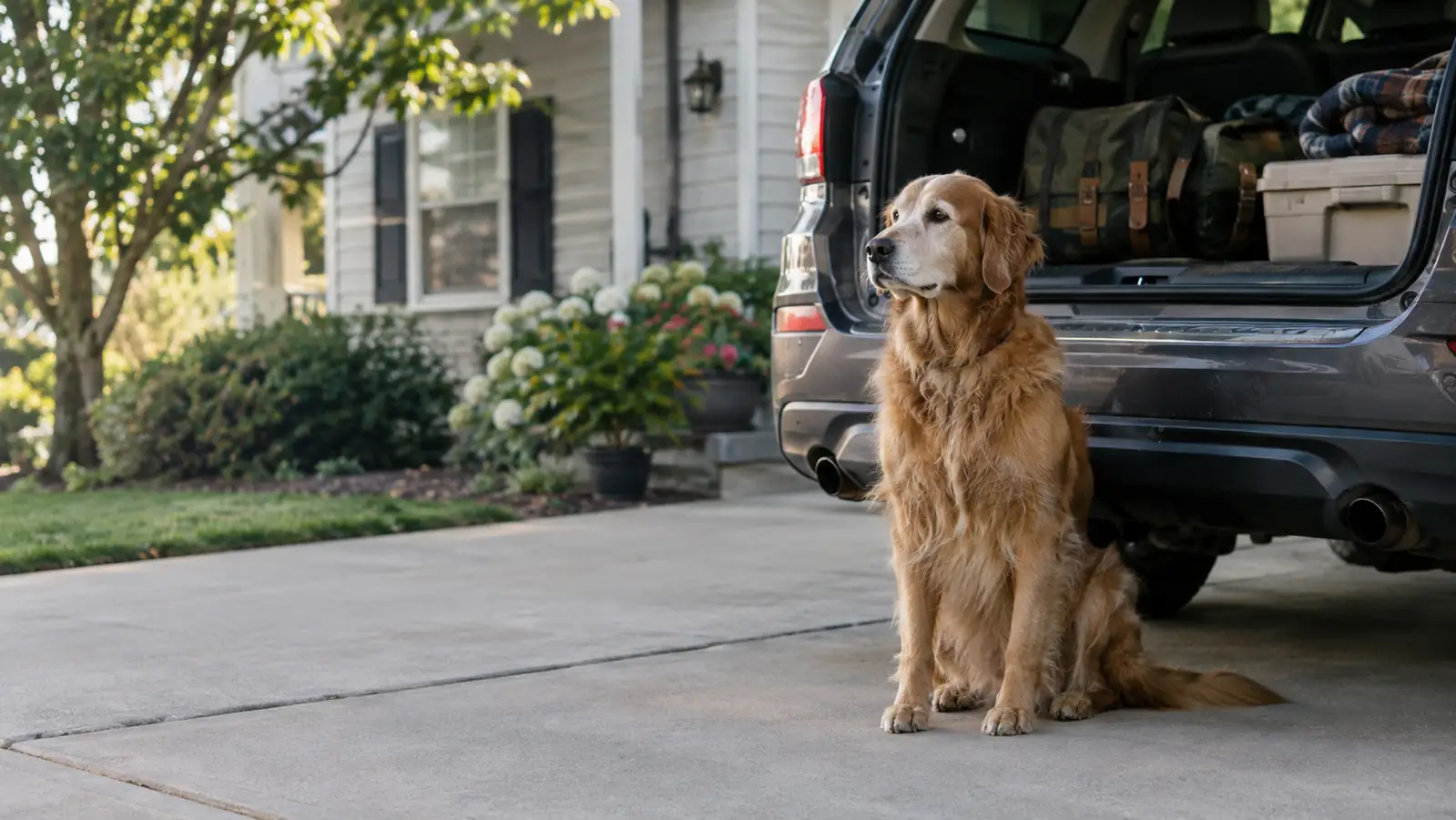
Maple is 11 years old, a yellow Lab who weighs about 70 pounds, and this is the story of how a PetSafe ramp changed our mornings. For the last two years I have been lifting her into the back of my small SUV. I am 61, a retired PE teacher, and I can still lift her. That is not the same as saying I should. Every time I did it, I could feel it in my lower back, and Maple could feel it in her hips. She would brace herself, ears back, and I would apologize the whole way up. It was not a system. It was a countdown to one of us getting hurt.
I tried the things people suggest. I tried a set of dog steps, but Maple has never been patient with her back feet, and on steps she would rush the top and miss. I tried a towel under her belly, which worked until she decided she was done and I was left holding most of a 70-pound dog. I tried telling myself she was fine, which was the most expensive option of all, because it cost me a whole season of pretending.
What finally changed was not a big dramatic moment. It was a Tuesday. Maple came in from the backyard, stopped at the porch steps, and looked at me the way she looks at the stairs at the vet's office. Not scared. Just done. She was telling me the jump was no longer worth it, and I finally listened.
I asked my vet about ramps, because I do not make decisions about Maple's body without asking someone who knows more than I do. She said a ramp was a reasonable idea for a dog with stiff hips, as long as the slope was gentle and the surface gave Maple something to grip. That is how I ended up with the PetSafe Happy Ride Folding Dog Ramp, and it is the reason I am writing this down for you.
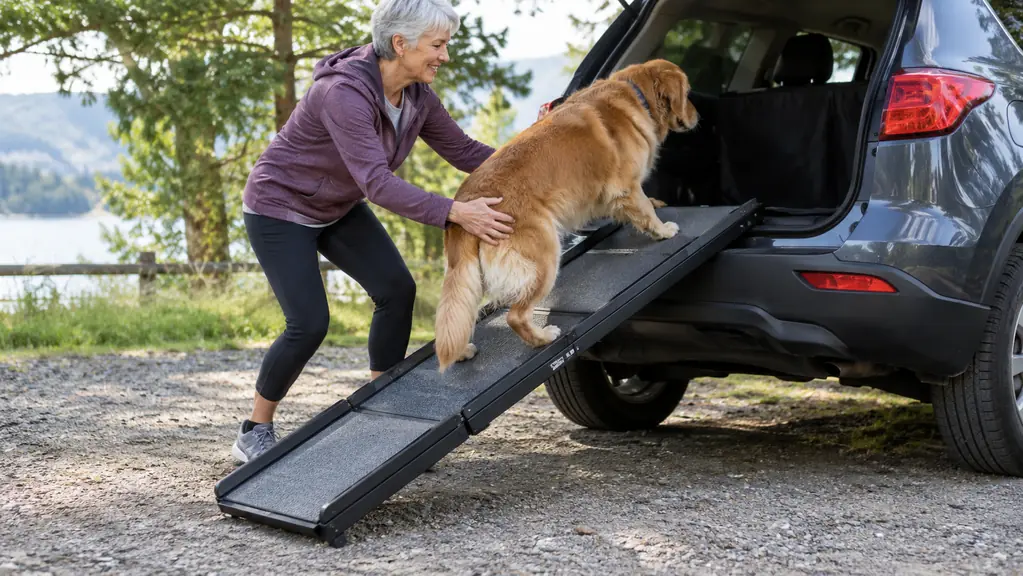
The first time Maple walked up the PetSafe ramp, she did not hesitate. She walked up it like she had been doing it her whole life, and I stood there with my hands in my pockets, not lifting anything.
Stop Lifting. Let Maple Walk.
The PetSafe Happy Ride Folding Dog Ramp turns the hardest part of your day into a walk up a gentle slope. See today's price on Amazon and read what 15,000 other owners say.
Amazon Check Today's Price on Amazon →The ramp folds in half and fits in the back of my SUV without a fight. I keep it behind the back seat, and when we go to the park or the vet, I pull it out, set the base on the ground, and rest the top on the tailgate. The surface is textured, which matters more than I expected. Maple's feet do not slide, and a dog who does not feel her feet slipping is a dog who will try again tomorrow.
The first time we used it, I did everything wrong. I set it up in the driveway, called Maple over, and she looked at the ramp like I had brought home a garden hose that was pretending to be a bridge. So I did what I used to do with nervous students in PE class. I stopped pushing. I put a treat at the bottom, then a treat halfway up, then I walked up the ramp myself and sat in the back of the SUV like it was the most normal place in the world. She followed me. Of course she did. She has been following me for 11 years.
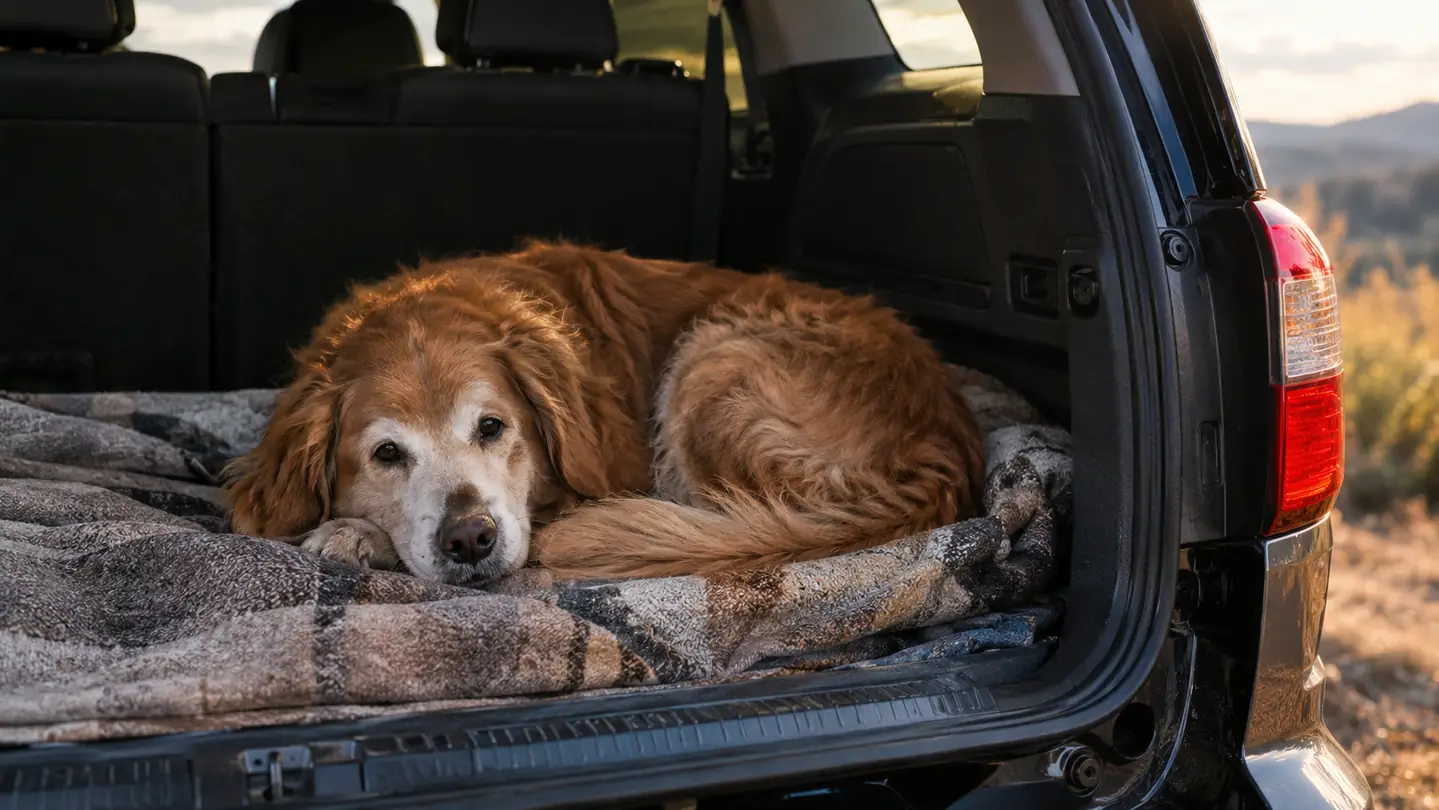
Now it is routine. Maple walks up the PetSafe ramp, turns around in the cargo area, and lies down on her blanket before I even close the tailgate. Coming down is slower, and I stay right beside her, but she does it on her own. My back has stopped aching on Sunday nights. More importantly, Maple has stopped bracing herself. She gets in the car the way she used to, like it is an adventure instead of an ordeal.
I will be honest about the tradeoffs, because I think you deserve them. It weighs about 10 pounds, so I carry it by the handle. It also takes about thirty seconds longer than just lifting the dog, and on a cold morning, thirty seconds feels like an eternity. But here is what I tell myself: I am not in a hurry. I am in a routine. And a routine that does not hurt either of us is worth thirty seconds.
I also want to be clear about what the PetSafe ramp is not. It is not a cure for stiff hips, and I would never claim it is. Maple still gets up slowly after a nap. She still takes the long way around the porch steps. But the car is no longer a thing she dreads, and that matters. The vet told me that keeping her moving, gently and consistently, is one of the best things I can do for her. The ramp does not do the moving for her. It just removes the reason she was starting to say no.
What I'd Tell You If We Were Sitting at My Kitchen Table
If you have a senior dog who hesitates at the car, I would tell you this: do not wait until you are both frustrated. Do not wait until you have lifted her one too many times and she has flinched one too many times. Talk to your vet, get a ramp, and give your dog two weeks to decide it is normal. Put a treat at the top. Sit in the car yourself. Make it a game instead of a procedure. And if the first ramp you try does not work, try a different one, because the right ramp is the one your dog will actually walk up.
I would also tell you that you are not a bad owner for having lifted her this long. You were doing the best you could with the information you had. I did the same thing. But now you have more information, and so did I, and that is the whole story. Maple is 11, she still rides in the car with her head out the window, and I do not lift her anymore. That is the win. It is not a dramatic win. It is a Tuesday-morning win, and I will take it.
Give Your Senior Dog the Car Ride Back
If Maple can learn to walk up a ramp at 11, your dog can too. Check today's price on the PetSafe Happy Ride Folding Dog Ramp and see if it fits your routine.
Amazon Check Today's Price on Amazon →