
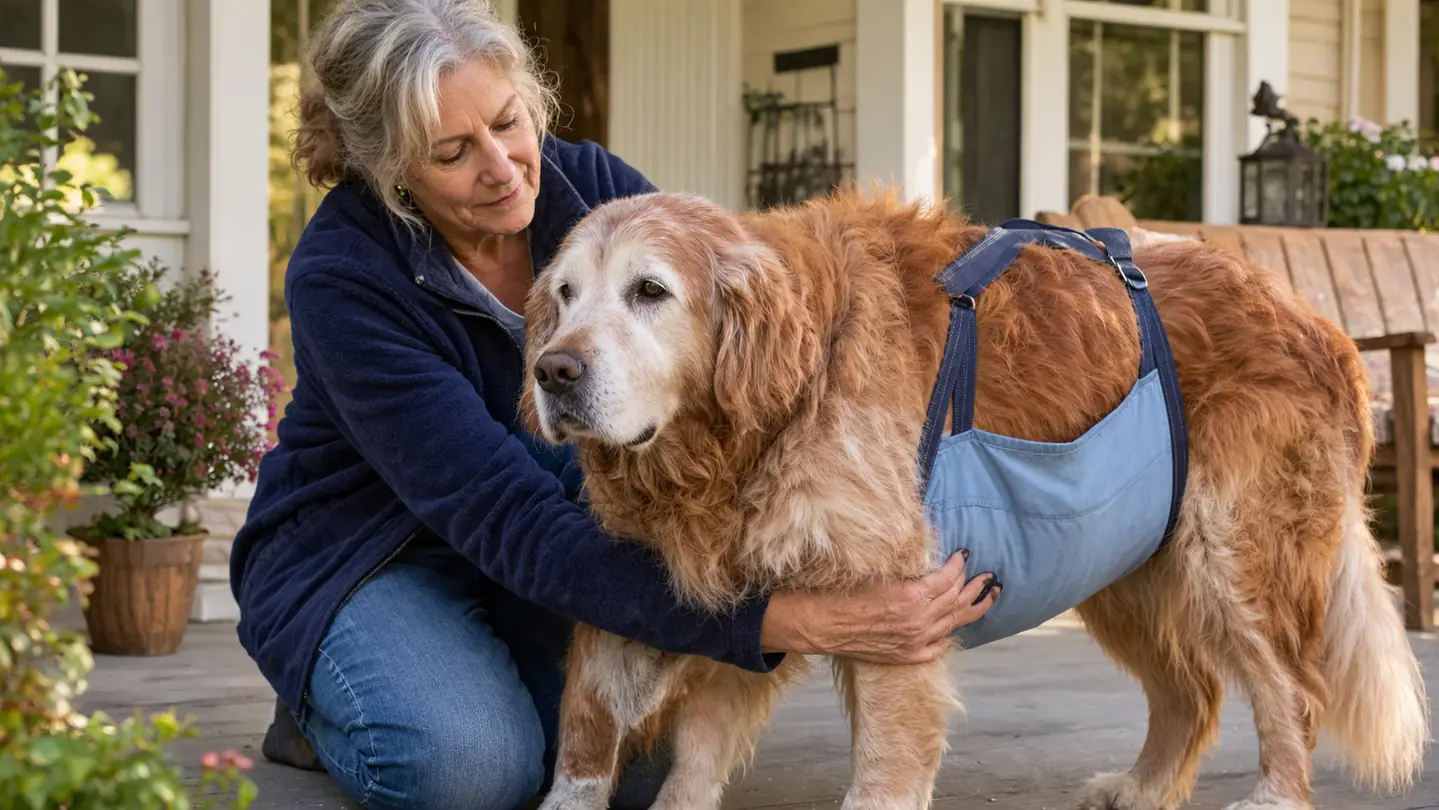
Maple is 11, a yellow Lab who still thinks she is a puppy until she tries to stand up. Her back hips are stiff, she is slow to get up after naps, and those three back porch steps have become the hardest part of her day. I am Glenda, a retired PE teacher in Lexington, and I treat her mobility the way I treated my students' fitness: consistency over gimmicks. Before I bought anything, I tried a folded bath towel under her belly. It bunched up and slid sideways, and Maple looked at me like I had lost my mind. I tried scooping her up in my arms, the way I carried my grandkids when they were small, and that worked for about ten feet before my back reminded me I am 61. The towel experiment lasted two days. The carrying experiment lasted one. So when I decided to compare the LOOBANI sling against a full body lift harness, I did it the same way I would have timed a relay race. I used both every day for three weeks, kept notes, and let Maple tell me which one she trusted.
The short answer: the LOOBANI sling won for everyday porch steps and car rides, while the full body harness won for the rare moments when Maple needed total support after a long walk. If you are choosing between the two, the sling is the one I reach for most mornings. Here is why.
| LOOBANI Sling | Full Body Lift Harness | |
|---|---|---|
| Setup time | Slip the padded band under the belly, clip the buckles, grab the handles. About 20 seconds once you have done it twice. | Step the back legs through, pull the harness up, adjust four straps, check the fit. Closer to two minutes on a wiggly dog. |
| Support area | A wide padded band under the belly and rear, lifting the hips without squeezing the chest. | Full torso coverage that supports chest, belly, and rear all at once. |
| Best for | Daily help with porch steps, getting into the car, and short walks when the hips are stiff. | Recovery after surgery, longer walks, or dogs that need help standing from a full lie-down. |
| Ease of putting on | No leg lifting. Maple stands still and I slide the band under her. | Requires lifting each back leg to step through, which is hard if the dog is already sore. |
| Comfort for the dog | Maple stopped noticing it after the first minute. The band stays put once it is positioned low and close. | More coverage, but Maple fussed with the straps around her chest on warm days. |
| Learning curve for the owner | It took a few mornings to get my grip right. The handles are obvious once you hold them low and close. | I watched two videos and still adjusted the straps three times before it felt right. |
Where the LOOBANI Sling Wins
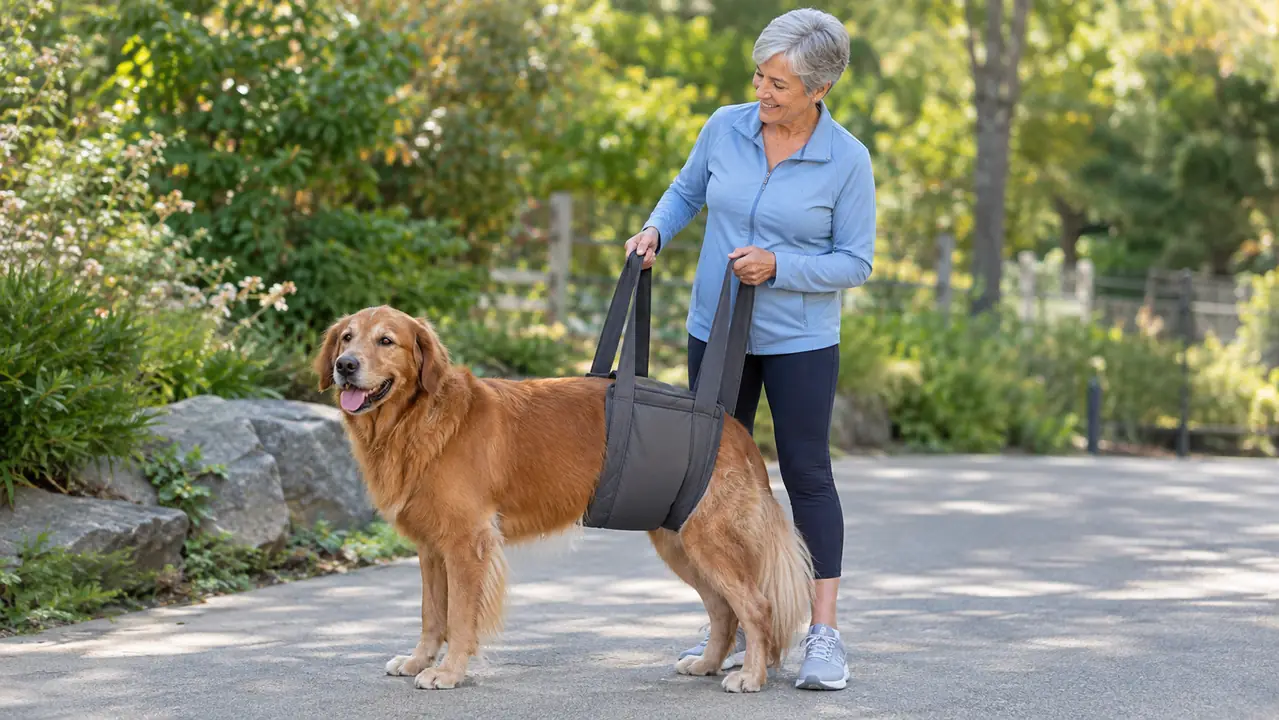
The LOOBANI sling wins the moments that happen every single day. Maple needs help with the porch steps in the morning, help stepping into the car after a walk, and help getting up from the kitchen floor after a nap. All three of those moments have one thing in common: she does not need total support, she needs a steady lift under her rear end to take the weight off her hips for the two seconds it takes to move. The sling does exactly that. The padded band sits under her belly and rear, I grab the handles, and I lift just enough to let her back legs do the rest. It is like spotting a student on the balance beam. You are not doing the work for them, you are there so they do not fall.
The other big win is the setup. With the full body harness, I had to lift each back leg to step it through, which is exactly the movement Maple struggles with. With the LOOBANI sling, she stands still, I slide the band under her belly, clip the buckles, and we are out the door. On a cold morning when she is stiff and I am holding a coffee mug, that difference matters. I also like that the sling does not cover her chest. Maple runs warm, and the full body harness made her fuss on 80 degree days. The sling leaves her chest free and she forgets she is wearing it.
I kept a little notebook on the kitchen counter for those three weeks, the same kind I used for grading. On the first Monday, it took me 22 seconds to get the LOOBANI sling on Maple, and I fumbled the buckles once. By Wednesday I had it down to about 15 seconds, and by the end of the second week I could do it without looking. The full body harness never got faster than about two minutes, and on the morning after a long walk, Maple would tuck her back legs when she saw it come out of the closet. That reaction told me more than any stopwatch could. She never once tucked her legs for the sling. I also wrote down how Maple behaved on the steps. On day one she stopped at the bottom and stood there for a full minute before I lifted. On day four she put one front paw on the first step on her own. On day nine she took all three steps with just my hand resting on the handles, no real lift. That progression was the whole story, and it is why I trust the notebook more than any marketing claim. The harness entries read differently. In those same three weeks I recorded 'leg tuck at the closet' three times and 'whined during strap adjustment' twice.
The porch steps are where the sling earned its place. Maple used to stop at the bottom, look up at the top, and just stand there. Each step is about seven inches tall, which does not sound like much until your dog cannot lift her own rear end. The first week with the sling, I would hold the handles and give a small lift on each step, and she would move her back feet one at a time. By the second week, she was taking the steps with only a light touch on the handles, and by the third week she was trotting up ahead of me. I do not think the sling fixed her hips. I think it gave her the confidence to try, because she knew I was there to catch her if she slipped. That is the same thing I told my students about the balance beam, and it is true for dogs too.
Where the Full Body Harness Wins
I am not going to pretend the full body harness has no place. It does. The week Maple had a bad flare-up after overdoing it in the yard, the full body harness was the better tool. It supports the chest, belly, and rear all at once, which means I could take more of her weight when she was truly struggling. For a dog recovering from surgery, or a dog that needs help standing from a full lie-down, that total support is worth the extra setup time. The harness also distributes pressure across a larger area, which matters if you need to support a heavy dog for more than a few steps at a time.
The tradeoff is that the full body harness is more work to put on. Maple is 70 pounds and her back legs are stiff, so asking her to step through the leg holes on a bad morning was asking for trouble. I also found the chest straps needed frequent adjustment. The LOOBANI sling is not the right tool for a dog that cannot bear any weight at all. If your vet has told you your dog needs full torso support, get the harness. But for the daily grind of helping an older dog move around the house and yard, the sling is the tool I actually used.
The day that convinced me the harness has a real job was a Friday in late September. Maple had chased a squirrel across the yard, something she has not done in two years, and she paid for it that night. She could not get up from her bed without whining, and the sling alone was not enough because she did not have the strength in her back legs to push at all. I switched to the full body harness, took most of her weight on the handles, and walked her slowly to the kitchen for water. It took four minutes and we both needed a nap afterward, but it worked. The next morning was a Saturday, which meant the grandkids were coming over. Maple could not miss that. So at 7:30, before anyone else was awake, I put the harness on her one more time, walked her the 40 feet from her bed to the back door, and let her do her business in the yard with me holding most of her weight. She was wobbly but she did it. By noon, with the grandkids on the floor beside her, she was wagging her tail like nothing had happened. That is the thing about having the right tool for a bad day: it does not just get the dog through the moment, it gets you both through it without fear. I wrote 'keep the harness' in the notebook that night. For that kind of moment, the harness is the right tool, and I am glad I had it.
The harness also wins for longer distances. On the days Maple felt good enough for a full mile, I could feel my own back starting to complain after ten minutes with the sling, because I was holding part of her weight the whole way. With the harness, the support is spread across her whole torso and the handles sit higher, so I can walk more upright. The difference showed up on the third Saturday of the trial. The weather was perfect, 68 degrees and sunny, and Maple wanted to walk the full loop around the neighborhood, which is 1.8 miles. I used the sling for the first mile and my lower back was talking to me by the halfway point. We stopped at the bench by the old oak tree, I switched her into the harness, and the last 0.8 miles were noticeably easier on both of us. She walked taller, I walked straighter, and we finished the loop in 41 minutes. The notebook entry for that day says: 'sling for steps, harness for miles.' I still would not use it every day, because the setup is a chore and Maple does not love the chest straps, but for a long walk after a flare-up, it is the better choice.
The sling I reach for every morning
If your dog needs a steady lift for porch steps, car rides, and getting up from the floor, the LOOBANI sling is the one I kept on the hook by the back door.
Amazon Check Today's Price on Amazon →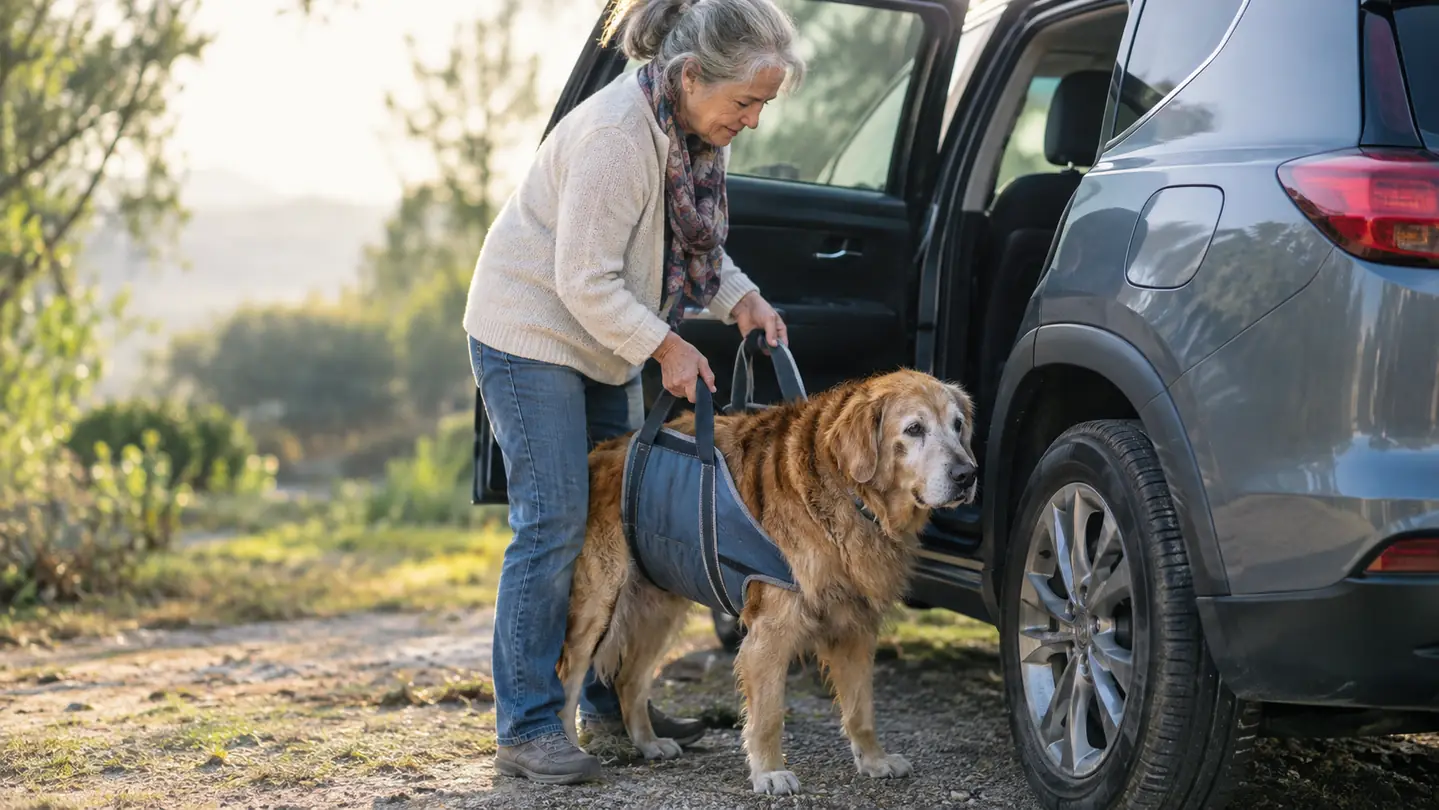
Who Should Buy Which
Buy the LOOBANI sling if your dog is like Maple: stiff hips, slow to get up, needs a steady hand under the rear for steps and the car, but can still walk on her own. It is the tool for daily life. Buy the full body harness if your dog is recovering from surgery, cannot bear weight on a back leg, or needs support for longer distances. And if you are not sure, ask your vet. That is the same advice I gave every parent who asked me about their kid's gym class: the right tool depends on the specific problem.
One more thing I would tell a friend: start with the sling, and keep the harness in the closet for the bad days. That is what I do now. The LOOBANI sling hangs on the hook by the back door, and the full body harness lives in a drawer in the laundry room. Here is what a normal morning looks like. I fill my coffee mug, grab the sling off the hook, and meet Maple at the back door. She stands still while I slide the band under her belly, and by the time I have the buckles clipped she is already looking at the steps. We go up together, me on the step below her, hand on the handles, and she moves her back feet one at a time like we practiced. Then she trots to the car and waits by the passenger door, because she knows the routine. The harness gets used maybe twice a month now, and I do not mind the two minutes of setup on those mornings because I know it is the tool that catches her when she really needs catching. Having both means I never have to make Maple wait for help, and that is worth more to me than any single tool.
Start with the sling for daily support
The LOOBANI sling is the one I kept by the back door. It is simple, it works, and Maple stopped hesitating at the steps within a week.
Amazon Check Today's Price on Amazon →